


With the arrests of immigrants surging, most of Hawaiʻi’s congressional delegation accuse federal immigration agents of creating “fear and terrorizing communities” in the Aloha State in a letter to be sent Tuesday to Department of Homeland Security Secretary Kristi Noem.
“Rather than making us safer or more secure, your needlessly aggressive immigration enforcement has created chaos and confusion in our communities while raising due process concerns,” the letter said, signed by U.S. Sens. Mazie Hirono and Brian Schatz, and Rep. Jill Tokuda.
Notably absent among the letter’s signatories: Hawaiʻi U.S. Rep. Ed Case.
In response to requests for an interview, Case sent a statement that said while he agreed with many of the letter’s statements, it failed to capture his or the “mainstream” of his constituents’ views on immigration.

“The bottom line is that I believe the letter did not place concerns with specific ICE enforcement in Hawai’i in the broader context of the necessity of enforcing our immigration laws including addressing illegal immigration, and of comprehensively reforming a clearly broken immigration system,” the statement said.
It’s unclear what impact the letter might have in a polarized political environment in which the Trump administration has steamrolled ahead with its policy initiatives.
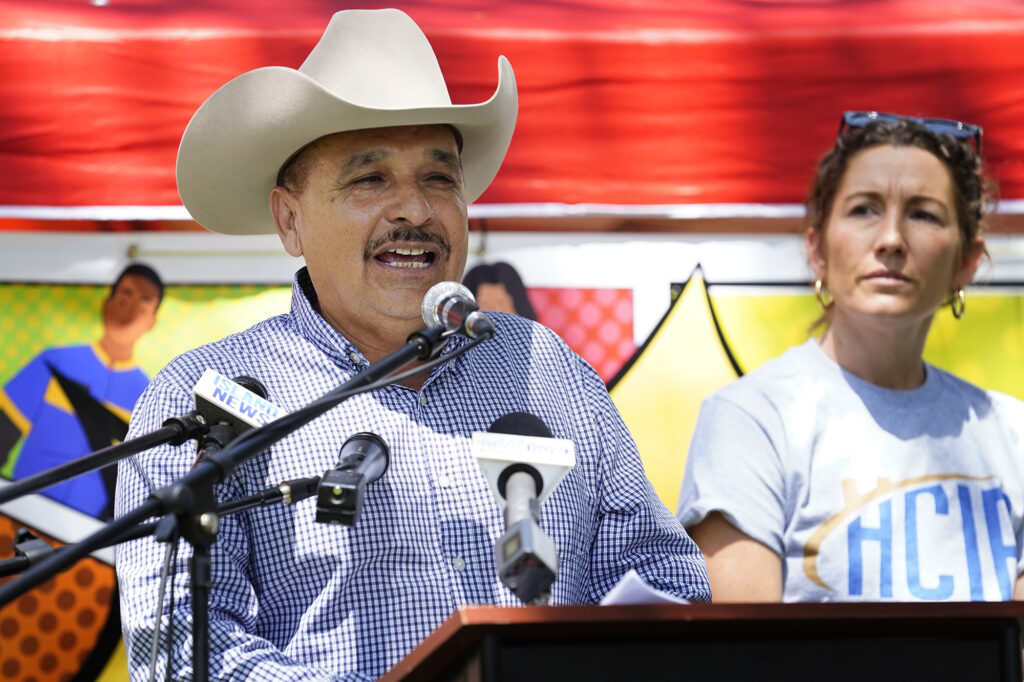
But South Kona coffee farmer Armando Rodriguez, a founder of ALOHA United, a Big Island nonprofit that supports immigrants, said the letter was welcome despite the uncertainty about where it might lead.
“We have to start somewhere,” he said, “it’s affecting our economy and our lifestyle. Nobody lives in peace here anymore.”
Dramatic Increase In Arrests
The immigration crackdown, which President Donald Trump made a centerpiece of his election campaign, has swept across the state since Trump took office.
Between Aug. 8, 2024 and Jan. 19 — the day before Trump’s second term began — ICE agents made 19 administrative arrests in Hawaiʻi. Between Jan. 24 and June 10, that number jumped to 117 administrative arrests – a 515% increase.
The numbers are based on data obtained through Freedom of Information Act lawsuits by the UCLA Center for Immigration Law and Policy, which provides the most detailed breakdown to date of the shifts in ICE enforcement practices in Hawaiʻi.
Spanning the timeframe from September 2023 through early June, it accounts for administrative arrests by ICE’s Enforcement and Removal Operations division, which are initiated based on a civil violation of immigration laws with the aim of deporting someone. It does not include arrests by Homeland Security Investigations, a division of ICE, or by Customs and Border Protection, a separate homeland security agency, or arrests that require the approval of a judge.
Citizens of Honduras, Mexico, Federated States of Micronesia, China and Guatemala – in that order – make up the largest groups of people arrested, according to the ICE data.
Enforcement On Big Island, Elsewhere
While the data doesn’t break down arrests by county, some of the highest-profile activity has taken place on the Big Island. There, agents have targeted the Kona coffee growing region, often through operations carried out in the name of welfare checks on migrant children that have swept up their family members and other caregivers. Civil Beat broke that story in May.
“We have already heard disturbing reports from coffee farmers, particularly smaller coffee farms, warning that these actions will result in their crops not being harvested,” said the letter, which Hirono initiated.

In one case from Civil Beat’s coverage cited in the letter, a Big Island first grader was turned over to immigration authorities after they arrested his father. In another, ICE agents detained at gunpoint a group of teachers from the Philippines who were working on Maui and had legal immigration status.
The letter said the Hawaiʻi lawmakers have heard from hundreds of constituents concerned that ICE is going after “children, workers, and longtime members of our community with little apparent regard for their criminal history or lack thereof.”
According to the new ICE data, the people coming into contact with ICE agents under the Trump administration — tracked as “encounters” and not necessarily resulting in arrests — are twice as likely to have a criminal conviction as those identified through encounters during the Biden administration.
There is nothing in the data about what those criminal convictions were for.
‘Strategic, Symbolic, Political’
The letter asked Noem’s department to take steps such as providing after-action reports detailing who was being targeted and who was detained, monthly briefings and a return to a policy under which immigration enforcement in schools, churches and medical facilities are in most cases prohibited.
That policy took effect during Barack Obama’s presidency. It was upheld by the first Trump administration but rescinded by the current one.
Hirono has received no briefings so far from the Department of HomelandSecurity or ICE, according to her communications director, George Flynn.
“The total lack of transparency from this administration about ICE’s enforcement activity now necessitates such briefings,” Flynn said.
Sophia Jordán Wallace, a professor of political science at the University of of Washington who specializes in the politics of immigration, called the letter “a combination of strategic, symbolic, and political action.”
Advocates for immigrant rights said it will help keep the spotlight on the administration’s immigration enforcement activities.
“I think that’s incredibly important,” said Tina Sablan, community and policy advocate at The Legal Clinic, a nonprofit that provides free legal services to immigrants.
ICE Ordered Cases Reviewed
The increase in arrests is at least in part a response to an ICE email directive sent Feb. 18 to the division of agents charged with arresting and removing immigrants calling on them to revisit unprocessed cases, including those of people who have not yet filed an application for asylum in the United States, but are not in detention.
The Hawaiʻi data shows an increase in the number of cases being conducted under the “Non-detained docket control” program — a reference to the agency’s list of noncitizens who have entered the U.S. seeking asylum and have pending immigration proceedings.
The email said the officers “should carefully review for removal all cases on the non-detained docket,” and review for re-detention “the case of any alien who was previously released due to no significant likelihood of removal in the reasonably foreseeable future.”
There have been 61 removals from Hawaiʻi since Jan. 20, the administrative arrest records show, but the UCLA researchers say they found “significant errors” with the agency removals data prior to Jan. 1, making comparisons with Biden-era removal rates unreliable.

<!– ![]() –>
–>
<!– Sign up for our FREE morning newsletter and face each day more informed. –>
Sign up for our FREE morning newsletter and face each day more informed.
Sign Up
Sorry. That’s an invalid e-mail.
Thanks! We’ll send you a confirmation e-mail shortly.